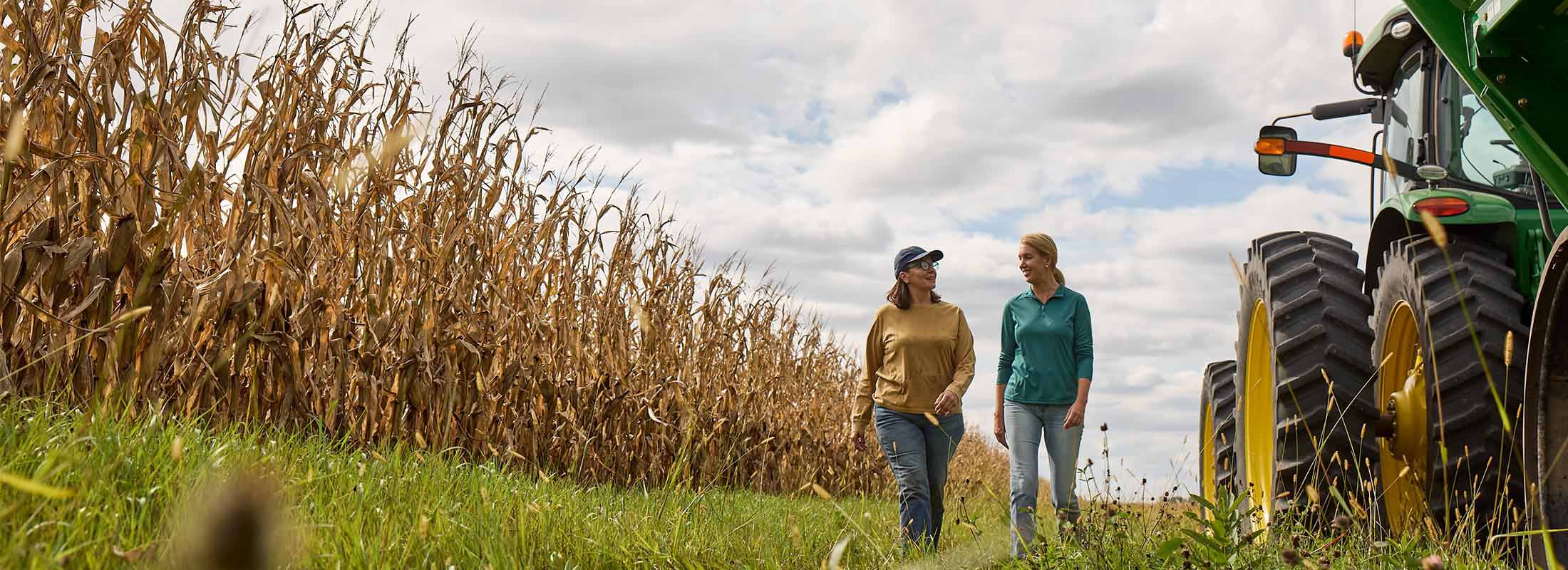

Most agricultural operations don't look the same today as they did five or 10 years ago.
Maybe you've added acres, invested in equipment, brought family members into the business, or started to think about the next generation. One decision at a time, your ag operation has evolved.
But when was the last time you considered whether the financial structures supporting your operation evolved with it?
In many cases, they have. In others, decisions that made sense years ago may not align as closely with the operation you have today. That’s why it can be valuable to occasionally step back and ask: Does today's setup still support today’s goals?
Key takeaways
Farm operations often change significantly over time.
Financial structures don't always change at the same pace as the business itself.
Taking a fresh look can provide confidence that today’s setup still reflects the operation.
Looking back at how your operation has changed
Most farms and ranches don’t transform overnight. They evolve through a series of decisions made one step at a time, and those decisions can add up to an operation that looks very different than it did a decade ago.
A farm that expanded rapidly may have different cash flow patterns than it did several years ago. A producer who has accumulated more working capital may view the operation differently than when liquidity was tighter. Changes in land ownership, rented acres, or enterprise mix can create priorities that did not exist when earlier decisions were made. A business that has entered succession conversations may also be operating with different priorities than when growth was the primary focus.
The point is not that something needs to change. It is simply an opportunity to recognize how the operation itself has evolved and whether your current approach still reflects where the business is today.
What has changed about my operation over the last five or 10 years?
Think about when some of your bigger financial decisions were made. Since then, have acres, equipment, enterprise mix, family involvement, cash flow, or priorities changed?
Does today’s setup fit today’s operation?
The operation you have today may look very different than it did when previous financial decisions were made. It may be worth revisiting whether past decisions still support where you are now.
Are my priorities still the same?
Whether you're focused on growth, efficiency, risk management, or transition planning, it's worth considering if past decisions still align with where you're headed next.
Clarity has value even when nothing changes
One of the most common outcomes of a periodic review is discovering that the current approach still fits your farm or ranch well. That's not a wasted exercise. Confidence often comes from knowing that you've looked closely at the bigger picture and confirmed things are aligned.
A fresh look does not have to start with a problem. It can be as simple as talking through what has changed, what has stayed the same, and whether the current approach still supports where your operation is now. Sometimes it helps to talk those questions through with someone who knows agriculture and knows your operation.
Questions about your setup? Talk through what’s changed in your operation.